
Updated: 18/08/2026
6 mins
Destination: UK & Ireland
Share
In this article
A Guide to Shoulder Season Travel in the UK
The paths are quieter. The pubs have tables. The best country inns suddenly have rooms again. And those landscapes everyone comes to see? Still every bit as beautiful.
There’s something rather brilliant about travelling in the shoulder season. We probably shouldn’t tell everyone.
Shoulder season here in the UK & Ireland means late March to early May, then again from late September through October. It sits either side of the summer rush and, whisper it, we often prefer it.
The days are still long enough for proper adventures. The landscapes are changing by the week. And there’s a little more space to slow down, look around and enjoy where you are.
Walk historic trails. Cycle quiet country lanes. Spend a spring afternoon in a garden bursting into bloom. Then, in fall finish somewhere warm with good food and a well-earned drink.
Sounds pretty good to us.
Here’s why we think shoulder season is one of the best times to explore England, Scotland, Wales, or Ireland.

Seasonal Scenery
Spring and autumn don’t do things by halves around here.
In the Cotswolds, spring brings fresh green hills and flowering hedgerows, while in Ireland the Wicklow Mountains turn brilliantly green and the woodland around places like Glendalough starts to wake up.
By late April and early May, woodland around places such as Chipping Campden can be carpeted in blue. For travellers who haven’t seen an English bluebell wood before, it’s quite a sight — and considerably better experienced without a coach party behind you.
Further north, Scotland has its own spring show. In Perthshire and the Highlands, woodland floors fill with wildflowers while the hills gradually lose their winter coat.
Spring is also a glorious time for gardens. Hidcote and Kiftsgate fit beautifully into a walking itinerary, while Batsford Arboretum adds another excuse to stop, wander and see what’s flowering.
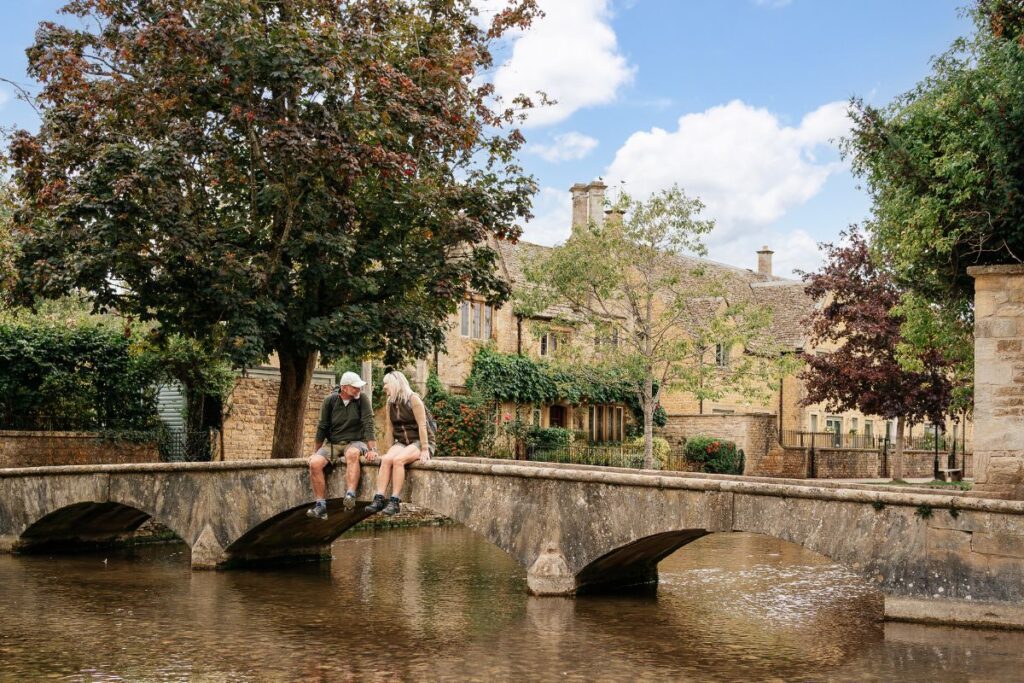
Come autumn, the Cotswolds change character completely. Westonbirt Arboretum becomes the headline act, with its famous collection of maples putting on a spectacular show. Pair it with walks around villages such as Bibury and Castle Combe and you get something very different from the height of summer: quieter streets, richer colours and time to properly enjoy them.
Scotland gives autumn a good run for its money too. Perthshire — often called Big Tree Country — turns gold and copper, while Ireland’s Wicklow and Killarney landscapes take on deeper, richer colours
Better Weather For Adventure Travel
Yes, we need to talk about the weather. This is Britain and Ireland, after all. We’ll never promise it won’t rain. We will plan brilliantly for the possibility that it might.
What shoulder season often gives us is something active travellers really appreciate: cooler conditions for getting outside and staying there.
Walking all day is simply more enjoyable when you’re not battling the hottest days of summer. Longer routes feel more manageable, climbs feel kinder, and there’s still enough daylight to make a full day of it.
By late March, the evenings are already stretching out. That can mean another hour on the trail, a wander around a village before dinner or, equally importantly, enough time for a pint without watching the clock.
Routes such as the Cotswold Way really come alive during these seasonal transitions. So too do stretches of Ireland’s Wild Atlantic Way and Kerry’s walking trails, or Scotland’s West Highland Way, where cooler air and quieter paths make longer days on foot considerably more appealing.
Cycling comes into its own too. That might mean rolling through the Cotswolds, following quiet roads around the lochs of Scotland, or cycling through the green lanes and coastal landscapes of Ireland.

Fewer Crowds
This might be the bit that wins people over. The Cliffs of Moher, the Dingle Peninsula or Glenoe. They’re famous for a reason, but on a busy summer day they can feel, well… busy.
Visit outside peak season and the experience changes. You can wander rather than weave. Take a photograph without seventeen strangers appearing in it. And actually hear the person you’re travelling with.
We’ll nearly always encourage exploring on foot or by bike where possible — it’s the best way to find the quieter corners — but travelling at a quieter time of year gives us an excellent head start. Fewer crowds mean better photos, better conversations and, very often, better memories.

More Availability
There’s another shoulder season benefit that doesn’t sound quite as romantic, but makes an enormous difference to a trip. Rooms.
The places we love using are often small: characterful country inns, independent hotels and intimate lodges with a handful of really good rooms rather than hundreds of identical ones.
Wonderful? Yes. Easy to secure in the middle of summer? Not always.
Shoulder season gives us much more flexibility, particularly in popular regions. That matters enormously for inn-to-inn walking trips. The magic of those journeys is finishing the day’s walk somewhere full of character, dropping your boots, having a hot shower and heading downstairs for dinner. The right accommodation is part of the adventure, not simply somewhere to sleep.

The Things You Didn’t Plan
Some of our favourite travel moments aren’t the ones highlighted in bold on an itinerary. They’re the things you happen upon because you’re in the right place at the right time.
A farmers’ market setting up in a Cotswold village square. Fresh bread and local cheese bought before the day’s walk. A garden caught at exactly the right moment in spring. In Ireland, it might be stumbling across live music in a village pub, a local food market or a small community event you’d never have found by searching for ‘things to do’.
In autumn, you might find a village harvest celebration, church fete or community gathering underway. Nothing enormous. Nothing staged for visitors. Just local life carrying on — and inviting you into it for a while.
These aren’t always the moments you travel for.
Quite often, they’re the moments you remember.

Our Kind of Season
We love shoulder season because it lets us do what we do best: create adventures with the right rhythm.
A brilliant route without the rush. A characterful inn we actually want you to stay in. Time for the unexpected stop, the extra viewpoint, the conversation with a local or the pub you weren’t planning to visit.
And for guest, it means seeing these places when they feel a little calmer, a little more personal and, we think, rather special.
So yes, shoulder season might just be one of the best-kept secrets in Britain and Ireland.
But between us? Let’s keep whispering it.

Experienced by
Sophie
Content Marketing Manager